Retail Business
Loans, Financing
& Funding
Last updated: July 2026
Retail businesses of all sizes, from one-location boutiques to multi-location franchises, rely on us for fast, flexible financing built around how retail actually works.

Financing at a Glance
What makes retail financing different?
Seasonal buying cycles, inventory-heavy operations, and thin margins create cash flow challenges that standard lenders often misunderstand. We build financing around how retail businesses actually operate.

Seasonal Inventory Capital When You Need It
Retail purchasing cycles require capital well before revenue is collected. Whether you're buying holiday inventory in September or stocking up for a back-to-school rush, we move fast enough to keep your shelves full at the right time.
Revenue-Based Repayment Available
Our Revenue Advance product repays as a percentage of your daily sales, so slower days mean smaller payments. This flexibility is especially valuable for retailers with seasonal sales patterns.
No Collateral Required
Most retail financing products are unsecured. Approval is based on your store's revenue performance, not on pledging store fixtures, inventory, or personal assets.
Works for Single Locations & Multi-Location Operators
Whether you're a boutique owner with one location or a franchisee managing multiple storefronts, we have financing structures that scale with your retail operation.
How does retail business financing work?

Apply Online in Minutes
Submit a brief application and connect with a dedicated Capital Advisor. Share what your retail business needs, inventory, expansion, technology, or working capital, and they'll guide you from there.

Get a Decision
Your advisor reviews your store's revenue profile and presents a clear funding offer with transparent terms. No excessive paperwork, no unnecessary delays, often a same-day decision.
Access Your Funds
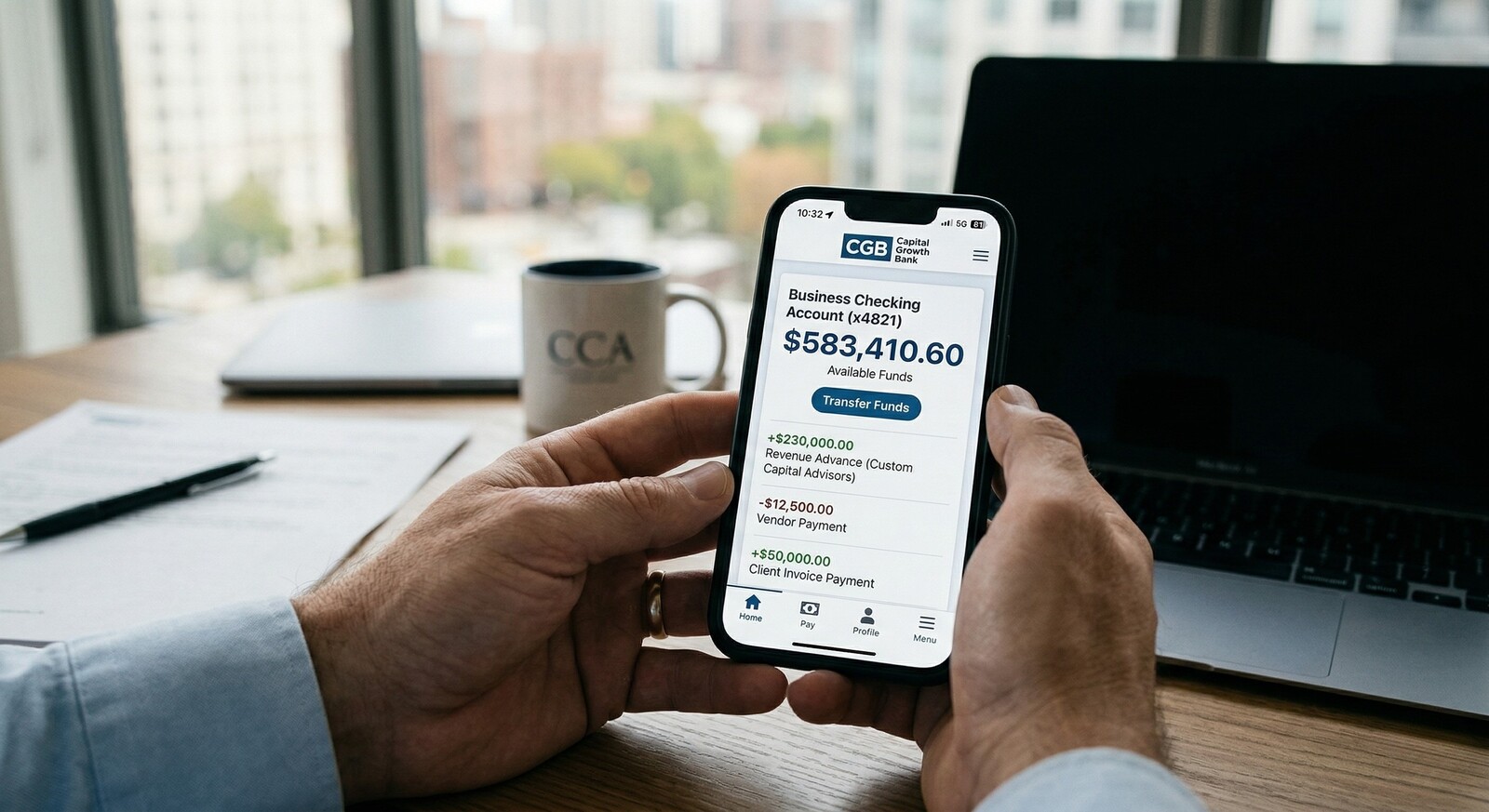
Receive a lump-sum deposit as fast as 24 hours after accepting your offer. Buy inventory, upgrade systems, cover payroll, or invest in your next location, right away.
What can you use a retail business loan for?
From stocking inventory to upgrading technology, retail business loans help you stay competitive, fully stocked, and ready for peak demand.

Operations & Expansion
Buy inventory, cover overhead, expand to a new storefront, or remodel your existing location, with capital available without pledging collateral.
Technology Upgrades
Upgrade POS systems, implement inventory management software, launch or improve e-commerce, and invest in security infrastructure to run a more efficient retail operation.

Payroll & Staffing
Retail staffing demands shift with seasons. Keep your team intact through slower periods so you're fully prepared when peak demand returns.
What are the best financing options for retail businesses?
Not every financing structure fits every retail business. Explore our products to find the right fit for your operation.
Small Business Loan
Lump-sum working capital with no use restrictions. Buy inventory, cover overhead, fund a remodel, or address any other retail business need.
Learn MoreRevenue Advance
Upfront capital repaid as a percentage of your daily revenue, ideal for retailers with seasonal fluctuations and variable monthly sales.
Learn MoreEquipment Financing
Purpose-built for POS systems, display fixtures, refrigeration, security systems, and other retail infrastructure. Own it outright at the end.
Learn MoreLine of Credit
Revolving access to capital, draw when you need it, repay, and draw again. Great for ongoing inventory purchasing and cash flow management.
Learn MoreTerm Loan
Long-term structured repayment for major investments, opening new locations, large-scale renovations, or significant inventory expansions.
Learn MoreNot Sure? Ask Us.
Your Capital Advisor will review your store's revenue profile and recommend the financing structure that fits your specific retail operation.
Let's TalkHow do you qualify for financing for a retail business?
Most funded retail businesses share a visible trading history, consistent deposits, a clear picture of existing debt, and an owner who can explain what the money is for. None of these is a threshold you pass or fail, and lenders weigh them together.
Time in business
Options open up around six months of operating history and widen considerably after two years. Newer stores are not out, but the product set is narrower.
Monthly revenue and deposits
Lenders read bank statements first, looking for consistency across the month rather than one large number, because retail revenue arrives in daily increments.
Credit
Personal and business credit both matter, and neither decides alone. Weaker credit narrows the set and shifts terms rather than closing the door.
Existing debt
A current debt schedule matters as much as the credit file. A store already carrying several short-term positions is in a different conversation.
Which retail financing solutions fit which situation?
| The situation | Retail financing solutions that usually fit | Why |
|---|---|---|
| Buying inventory ahead of a peak season | Revenue advance, line of credit | Repayment tracks sales, so a slow month costs less |
| Opening or fitting out a second location | Term loan, equipment financing | Long-lived cost, matched to a longer repayment |
| Covering a gap between a slow month and a strong one | Line of credit | Draw only what the gap needs, repay when sales return |
| Replacing point-of-sale systems, refrigeration, or fixtures | Equipment financing | The equipment itself supports the structure |
| Paying staff through a seasonal trough | Revenue advance, line of credit | Speed matters more than term length here |
| Buying out a competing store or a partner | Term loan | Fixed cost, fixed schedule, known total |
The same store often uses different solutions at different points in its year. Inventory before a peak season may call for flexible working capital, while a second location or a major equipment purchase has a longer useful life and deserves a matched repayment structure. A line of credit can cover the timing gaps between those larger decisions.
How much can a retail business borrow?
There is no single number, and any figure quoted before someone has looked at your statements is a guess.
Revenue-linked products size against recent monthly deposits.
Term loans size against the whole financial picture, including existing debt and collateral.
Equipment financing sizes against the equipment.
A line of credit sets a limit rather than a lump sum, and most stores never draw the whole limit.
Stores frequently qualify for more than they should take. The useful question is what the capital returns, rather than what the maximum is.
Do retail finance solutions work for e-commerce and multi-location retailers?
Yes, the same broad solutions can work across retail models, but lenders read different evidence in each case.
Single-location brick-and-mortar
This is the default model the rest of the page describes. Lenders look at store deposits, seasonality, inventory needs, and the operating history of the location.
Multi-location operators
Lenders read consolidated statements and look at whether locations perform consistently. A strong group can offset a newer or slower storefront, but location-level performance still matters.
E-commerce and hybrid retail
Processor deposits read differently from card-present deposits, chargeback history matters more, and inventory sits in a warehouse rather than on a shelf. The same solutions apply, and the underwriting reads different evidence.
Common Questions
Stock Your Shelves.
Grow Your Store.
Apply today and get a decision often within hours. Capital in hand within 24 hours of acceptance, so you never miss a buying opportunity.